What’s the difference between a writing coach and a mentor?

The difference between a writing coach and a mentor is a coach works with you for a particular purpose or goal. A mentor is a guru who is with you over an extended period in an advisory role. The relationship between coach and client is shorter-term versus longer-term mentoring relationships.

The confusion between coaching and mentoring

young annoyed female freelancer using laptop at home
Photo by Andrea Piacquadio on Pexels.com

It’s all too easy to confuse coaching and mentoring. Both aim to help clients learn from their experiences to overcome difficulties or succeed in various areas of their lives. Those in the process want to improve, usually through setting goals or working towards new skills.

Both approaches also rely on regular interactions to make a change. Coaching/mentoring sessions are used to review progress, decide on the next steps and gain more insight into what else they could do and how. Without these regular meetings, it is unlikely that any progress would be made.

The exchange of knowledge is a fundamental feature of coaching and mentoring, with each situation having a “teacher” and “student” in some capacity. In mentoring, this knowledge transfer is more direct and may be directly related to the individual’s role. In coaching, the information and guidance focus on how to unlock potential, what processes can be used to achieve success, and how to understand your own strengths and weaknesses.

Finally, mentoring can often involve aspects of coaching and vice versa. A mentor may coach their “student” by making a suggestion that helps them improve their self-awareness and trigger personal development.

However, there are essential differences between coaching and mentoring.

pink jigsaw puzzle piece
Photo by Ann H on Pexels.com

The differences between mentoring and coaching make each more suitable for different situations.

Firstly, a writing coach provides guidance and an actionable framework for growth and development. A mentor, on the other hand, centres around building a relationship between two people. While individuals may have a good relationship with their coach, trust and understanding are at the core of a successful mentoring relationship. More time is often invested in ensuring that the mentor and mentee are happy to work together.

The mentor and mentee relationship may see the mentor’s connections being utilised. For example, to open more doors and provide opportunities for experience and networking, which tends not to be offered in a coaching relationship.

Often, coaching focuses on what can be done in the present, which is another significant difference. In contrast, mentoring looks to the future and decides what needs to be done later to achieve the mentee’s goals. Having said that, goal setting and overall aspirations are aspects of coaching. However, coaching focuses on improving your performance now to uncover potential while putting systems in place to allow you to be more successful in the future.

While every scenario varies, coaching tends to be a shorter process. It may only last until a coachee is thought to have improved and feels more prepared to carry on without additional support. On the other hand, a mentorship relationship is often a long-term arrangement. The mentor and mentee will keep in touch for check-ins and reviews, and the mentor may support their mentee’s entire journey.

Finally, a coach will often have more training and qualifications in techniques and approaches to coaching development under their belts than a mentor. They may even be expressly certified as a business or development coach. Mentors usually have more experience and knowledge of the industry they work in. However, they’re less likely to be certified to coach.

What is coaching?

two women sitting in front of computer monitor
Photo by Startup Stock Photos on Pexels.com

Coaching is a developmental process focusing on improving performance and achieving goals. It measures what skills, tools, and resources are available and builds on these to enable progress and achievement.

At its core, coaching believes that individuals already have everything they need to achieve what they want. Coaching aims to reveal this potential and help the individual realise how to succeed. A coach highlights the existing tools instead of teaching them something new.

Coaching is also about helping an individual develop self-awareness. This is so that the coachee can realise their skills, work out what they want to achieve, and create realistic strategies for getting there. By the end of a coaching period, an individual will have a workable framework. They should also feel empowered and fully equipped to set and achieve goals without relying on someone else for support and guidance.

What is a writing coach?

A coach enables development by working with individuals to help them realise their potential and plan to achieve their goals. It is not a coach’s job to teach anything new or set out instructions about what needs to be done. Instead, a writing coach asks questions and provides a framework for individuals to find solutions to their challenges.

A coach is usually a trained professional who has studied and developed coaching practices and models. They are hired by individuals (or companies) to guide and reveal hidden abilities and aspirations, enabling reflection without offering direct instructions.

What can you expect in a coaching session?

A coaching session is a meeting between a client and a coach, where personal development is the main focus. The coach assesses the client’s current situation and suggests what needs to be revised to accomplish specific objectives. Coaches can’t tell you precisely what to do but may offer strategies to point you in the right direction. They will utilise coaching techniques in the tasks they set you.

A coaching session consists of objectives and activities the coach instructs the coachee to complete to achieve those specific goals. It’s not about sitting down and asking for someone else’s advice. It is about following through on those instructions so that you begin to see improvement in your personal and professional performance.

What is the difference between coaching and training?

I thought I’d deviate a moment to highlight the confusion between coaching and training.

Training is another method of learning that can easily be confused with coaching. However, an easy way to remember is that training involves acquiring new skills through transferring knowledge. In contrast, coaching builds on your skills and enhances your existing talents.

What is mentoring?

people sitting on the couch
Photo by RODNAE Productions on Pexels.com

Mentoring is another developmental process that relies more on the relationship between two people and the transfer of knowledge that comes from this. By pairing an individual with a more experienced peer, learning and development can occur more equally. A relationship of support and trust can be developed, leading to more meaningful progress.

Mentoring comes in many forms. Utilising the mentor’s experience and ability to pass on knowledge or starting from what the mentee can get from the relationship and what they hope to achieve. There doesn’t have to be a hierarchical difference in skill or experience in mentoring; sometimes, the mentor may be less qualified but possess skills that another may benefit from. The outcome of mentoring is to drive long-term growth and career development.

What is a mentor?

A mentor is a guide or supporter. They have extensive skills and experience and offer training and insight to someone at an earlier stage of their journey or right at the beginning.

The formality of a mentor’s role can vary based on what is appropriate for the situation. For example, companies create mentoring programmes between senior and junior employees. These programmes may have regularly organised meetings, structured systems of measuring improvement and a set timeframe. In contrast, other mentorship schemes may be more informal and about building supportive relationships.

What can you expect in a mentoring session?

Mentoring meetings are guiding conversations where your mentor will advise you rather than give hands-on instruction for you to follow. Mentors generally have already succeeded in the aspect of life you want guidance in. They’ll have more expertise and knowledge than you and share it during your sessions.

A mentoring session may focus on helping you improve your goal-setting skills. You can use the time to ask specific questions or for general advice. During a mentoring session, you’ll gain insights into life’s challenges and possibilities, such as career development, specific skill requirements, and business collaboration.

Writing coach or mentor, which is right for me?

photo of pathway surrounded by fir trees
Photo by James Wheeler on Pexels.com

Coaching and mentoring are instrumental ways to develop and learn. Many authors and business owners use both to support and enhance their growth.

A mentor gives advice and act like a role model by sharing helpful information over an extended period, while a business or writing coach enable you to take action with a framework. When seeking these services, look for information on their processes to make an educated decision about the support you require and what they give while working with them.

If you’re wondering if you’d benefit from utilising a coach or mentor, I can confirm that they’re incredibly beneficial strategies for everyone involved. Mentors and coaches can assist you in achieving your objectives.

Want a writing coach? Check out my coaching services.

The Artificial Intelligence (AI) Debate

AI is the biggest news story of 2023, causing impassioned debate in the creative community. (Listen to The Creative Penn podcast by author Joanna Penn or read her blog.)

Opinions can be polarised: on one side, you have a kind of utopian optimism (I, for one, welcome our robot overloads). And on the other extreme, apocalyptic doom-mongering.

I want to create a middle ground. I’m aware of the dangers and respect potential rights issues while accepting that AI is already here, whether we like it or not. I have to ask myself whether there is a safe and ethical way to use AI tools.

OpenAI‘s creation is Chat Generative Pre-trained Transformer (ChatGPT). And it’s the tool I’ve been playing with since hearing about it on Joanna’s podcast, hoping to make some marketing tasks more efficient rather than something more creative.

The explosion in popularity of ChatGPT has caught everyone by surprise. A few days ago, it passed 100m users—the fastest-growing consumer application in history.

For context: it took Instagram two years to reach 100m users. TikTok did it in 9 months, the pace of its growth throwing all the other social networks into a panicked redesign.

ChatGPT hit that milestone in 2 months!

man in black crew neck t shirt sitting beside woman in gray crew neck t shirt
Photo by Canva Studio on Pexels.com

Why is AI so controversial?

The depth of feeling on this issue is substantial. This is to be expected with any technological advancement which has the potential to be hugely disruptive. But it’s not just disruption which is causing concern.

As an editor and writing coach, I will not enter into the sea of societal and political concerns around AI. However, there are pressing issues specific to authors, artists, voice actors, etc., which I want to talk about.

Although I see the positive potential of AI, significant questions remain about how those Al models were trained:

  • Were creators’ work used without permission?
  • Were any rights infringed?
  • Plus, what is the legal status of work created with AI-powered tools?

Those questions have not been addressed adequately. Legal action has already been filed against Midjourney and Stable Diffusion, claiming that billions of images were scraped from the web without authorisation. (The first of many such steps, one would imagine.)

However, whether we like it or not—whether we’re ready or not—AI is already here.

They’re here.

AI is now being incorporated into Bing, and Google will follow shortly with its own version of AI-augmented search.

AI tools are now being incorporated in all sorts of other places, which will increase their usage exponentially. For example, WordPress announced that it is testing generative AI art blocks. This means that I’ll be able to effortlessly generate AI art by typing a description of the image I’m looking for right there in the back end of my WordPress site.

Change doesn’t wait for you to be ready. AI isn’t going to pause while everyone explores all the issues. The moral and legal issues around creators, rights, infringement, and the copyright status of anything made with these tools or the ramifications for society at large.

AI isn’t just here already—it’s about to go mainstream. And that’s going to make it impossible to ignore.

apple laptop notebook office
Photo by Pixabay on Pexels.com

Apple and AI Audiobooks

Tech giant, Apple announced last month that it would accept AI-generated audiobooks for the first time, something that most retailers like Audible don’t permit yet as I write this. Not only that, but Apple would provide AI narration tools to authors and publishers.

You can see why the idea is attractive to some: audiobooks can be expensive to produce (or require an incredible time investment if you make them yourself). Having AI narrate an audiobook would solve that problem neatly, significantly reducing the time and money needed to produce audio editions.

What worries me is the fate of some narrators. Voice actors are suddenly facing an existential threat of their own after finally seeing a viable and healthy audiobook market come into being. I’d be surprised if any real audiobook lovers welcome this development.

I’ve been told that some YouTube videos now seem to have AI narration. The quality is generally awful. Although it’s claimed that AI narration will soon be almost indistinguishable from human narration.

However, even if AI narration improves considerably, I doubt the quality could be as good as a human narrator. There’s more to narration than simply reading the text.

The worry is that once Apple has cut the narrators out, they’ll put the squeeze on authors next.

ChatGPT and Authors

What’s of most concern to authors is how AI might affect the future viability of their profession. The disruptive threat facing today’s narrators is just the beginning.

The most obvious concern is that authors could be replaced by a bunch of story bots chained up in the basement of Penguin Random House.

But after playing with Al a little, we’re still quite far away from it producing professional-grade creative work. Of course, given the pace of technological development, we can’t rule out an AI takeover in the future.

high angle photo of robot
Photo by Alex Knight on Pexels.com

My take on ChatGPT

I’m an independent woman, so even though there are genuine controversies around AI tools, I want to know a little more about how they work. This helps me understand the issues better.

I also want to see where all this AI stuff is headed. Work out how it might impact my business.

I’m no expert; if anything, I’m late to the party. But I’ve been playing around with ChatGPT recently and can see some potential in marketing terms. (I’m not using it for creative work at all.)

I heard it suggested that you shouldn’t think of ChatGPT as an expert-on-call, as the media often portrays it. A better approach is considering it a team of interns with boundless energy.

photo of women at the meeting
Photo by RF._.studio on Pexels.com

They often make mistakes, and you definitely have to check their work. Still, they can take much off your plate with clear parameters and constant supervision.

Here are some things I’ve been playing around with using ChatGPT.

•            Taglines, product descriptions, and sales copy

•            Social media text, captions, and headlines

•            Newsletter subject lines

•            Brainstorming/bullet pointing/outlining

Some of the stuff generated was useful, while others were terrible. However, I got better results when crafting more deliberate and detailed prompts. And I got the best results when I forced ChatGPT to refine its responses—one of the most impressive parts of this tech.

ChatGPT can give you an answer to whatever you ask. Still, you can interrogate it and force it to amend its responses based on more specific parameters. This process can lead you to the pot of gold you’re looking for.

person reaching out to a robot
Photo by Tara Winstead on Pexels.com

The AI middle ground.

I hope I have eased some more fanciful concerns about AI replacing humans entirely. Creativity still needs a human mind—at this point, anyway. Al needs humans to input probing questions and analyse, interrogate, and curate the output. Humans will iterate the prompts and know when the true destination has been reached.

And then—most importantly—to execute the information generated.

We’re not obsolete quite yet!

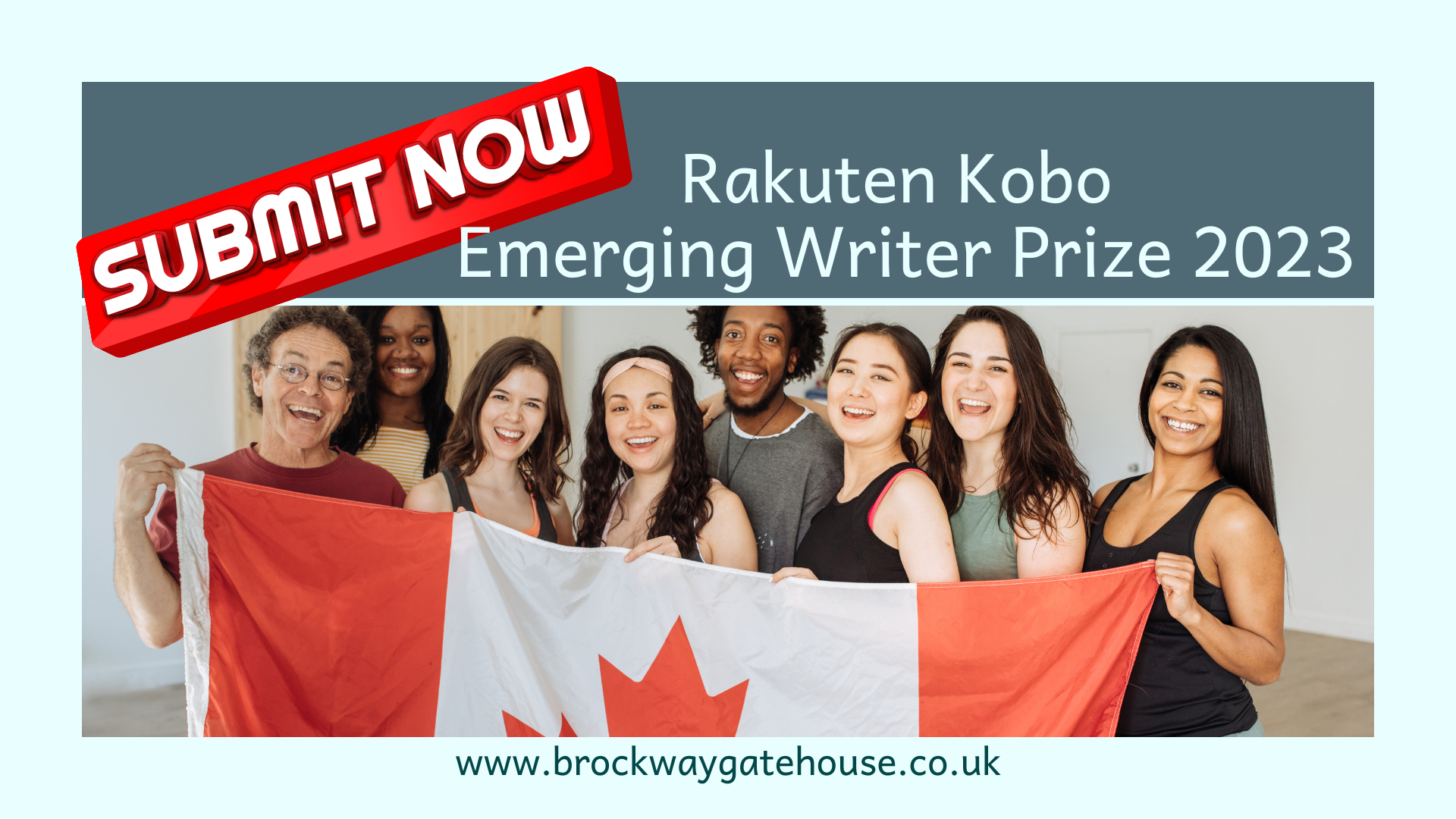
Emerging Writer Prize (2023) Open for Submissions

The Rakuten Kobo Emerging Writer Prize is an annual competition. The award showcases Canadian debut authors with the chance to win CAD 10,000 per category, plus marketing support for the three winning books.

About Rakuten Kobo Inc.

black kobo aura one tablet with box
Photo by Perfecto Capucine on Pexels.com

Rakuten is a Japanese multinational technology company based in Tokyo. Kobo is its digital publisher and bookseller business created by and for book lovers, with its headquarters in Toronto, Canada.

Rakuten Kobo has 38 million users worldwide. Its books can be read anytime, anywhere, and on any device.

Its mission is to improve reading lives by connecting readers to stories using an open platform.

The reason behind the Emerging Writer Prize

Kobo wants to raise the profiles of debut authors. This prize recognises exceptional books written by first-time Canadian authors in three categories:

  • Literary Fiction
  • Non-Fiction
  • Genre Fiction (a different genre is chosen each year, Speculative Fiction is the genre for 2023)

The Emerging Writer Prize is in its ninth year.

Last year’s winners were:

  • Literary Fiction: Ghost Forest by Pik-Shuen Fung. “A graceful and indelible debut about love, grief, and family”.
  • Non-Fiction: Unreconciled by Jesse Wente. A powerful part-memoir, part-manifesto which uncovers the truth of our flawed concept of reconciliation”. 
  • Genre Fiction (Romance): New Girl in Little Cove by Damhnait Monaghan.A delightful small-town, slow-burn romance”.

Three prominent authors are chosen each year to select the winning titles.

The 2023 judges are:

  • Literary Fiction: CS Richardson
  • Non-Fiction: Emily Urquhart
  • Genre Fiction (Speculative): Robert J Wiersema

Submit your book before the deadline: 6th March 2023!

The 3 winning authors will be announced in June 2023. The winners receive a cash prize of 10,000 CAD however, that’s not all. They also receive valuable marketing and communications support for the rest of 2023.

All books submitted must be available at kobo.com.

 Read all the Rules, Regulations, Terms & Conditions before entering.

Spread the word, and good luck!