Blog

Audiobook Review: Jake (The Protectors #26) by Teresa Gabelman
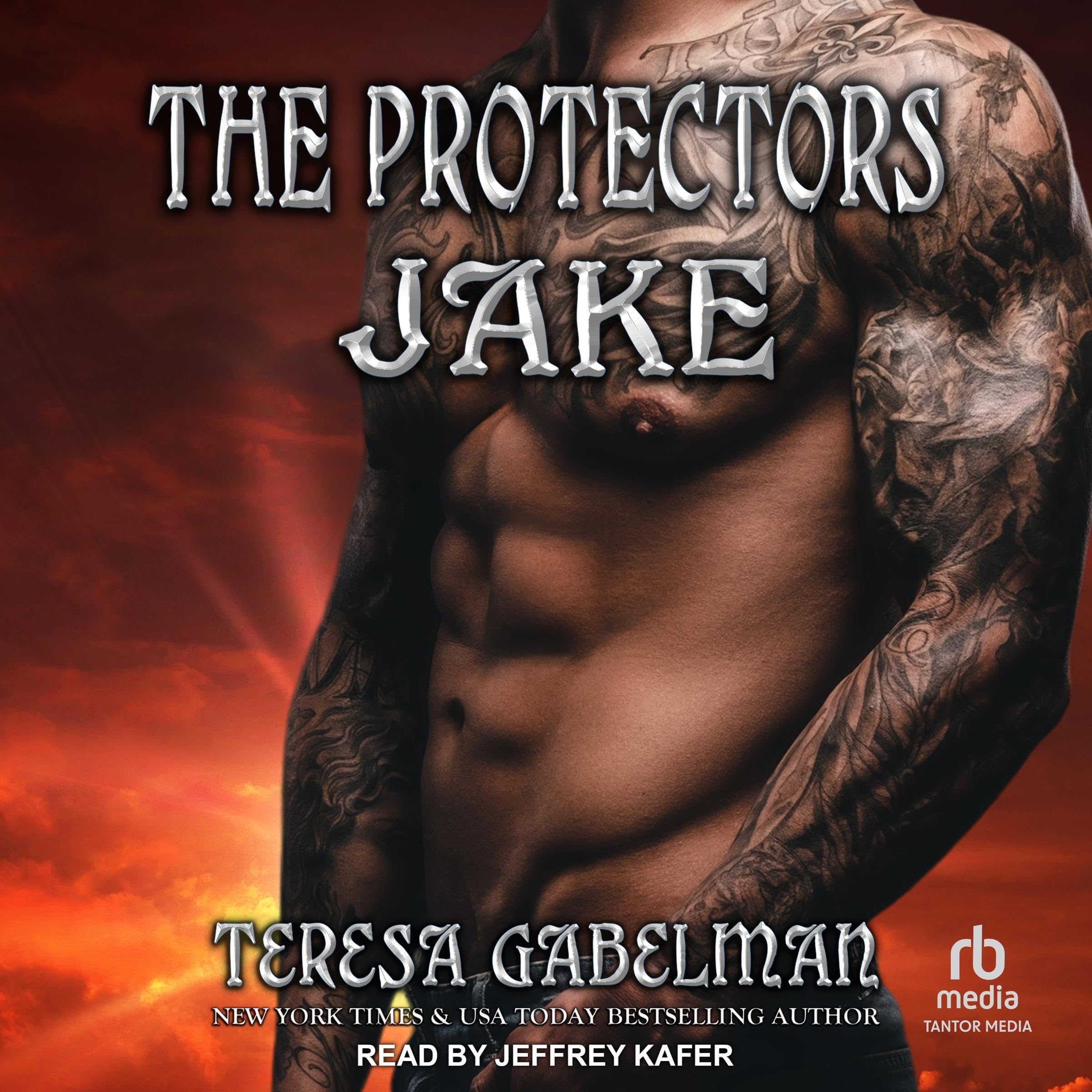
Jake (The Protectors #26) by Teresa Gabelman

Read/Listened to: 23rd–25th July 2026

Publication Date: 28th June 2023

Audio Publication Date: 23rd June 2026

Audiobook Published by: Tantor Media Inc (Recorded Books)

My Rating: 5/5

So, before we get into what I thought about Jake, a little disclaimer. I received a complimentary copy of this audiobook from Recorded Books for an honest review. All opinions are my own. Thanks for the copy.

Jake — Worth Every Emotional Punch

If you’ve read any of my reviews before, you’ll know that I don’t post spoilers of any kind or reveal any plot twists in my book reviews. Here’s what the official blurb has to say about the story:

After a tragic accident, Jake, former Dark Guardian, not only mourned losing his wife but carried the burden of a secret that only one other living person knew. Confronting that secret was the only way Jake could fight his heavy guilt when a beautiful ballerina dances into his life.

Jessie Reed loves everything about dance, but it didn’t pay the bills. Getting a job working with Nicole Callahan, Jessie is thrown into the VC Warrior and Dark Guardian world where she meets Jake, who saves her life not once, but twice.

Tormented by his feelings for Jessie, Jake still can’t seem to stay away from her, not realizing she had battles of her own. Slowly they build a bond that is shaky at best. As Jake and Jessie fight against the guilt that weighs heavily on them, neither realizes that a message from beyond the grave can give them the freedom of happiness.

Contains mature themes.

Each book in this fast-paced series focuses on the romance between one Warrior and his mate. However, the demon threat story arc began in previous books. Be warned, future books will continue this story arc. Although Teresa weaves the main points about any previous story-lines into this one, in all honestly, I’m unsure whether Jake can be read as a standalone story. I think you’d miss the nuances of knowing the existing characters, understanding the dynamics of relationships, and be familiar with the adventures to date if you jump straight in.

I am a huge fan of Teresa Gabelman’s writing, and this series has had my heart in a vice grip from the very beginning. Jake was no exception; if anything, it tightened that grip considerably.

A Character Whose Story Was Long Overdue

Jake has been a presence in the background for several books now, and I’d always been intrigued by him. On the surface, he seemed like your archetypal Dark Guardian: a rule-breaking badass with killer instincts, someone who would fight demons — literally — by any means necessary. But there were glimpses of something deeper beneath all that. Flashes of a pain he carried quietly. A tragedy he’d never quite found his way through.

This book finally gave Jake the spotlight he deserved, and I found his story genuinely moving. His backstory is heartbreaking, made all the more so because we only ever saw fragments of it before. Knowing what we know about him now, those earlier glimpses take on a whole new weight. Teresa handled his journey with a sensitivity and emotional depth that I wasn’t quite prepared for — and I mean that as the highest possible compliment.

As with all of Teresa’s alpha characters, Jake’s over-protectiveness occasionally veered into the territory of utterly, frustratingly smothering. But then his capacity to love — body and soul — would come roaring back, and all was forgiven.Every single time. Lol!

Jessie Reed — An Instant Girl-Crush

I’d been introduced to Jessie in A Warrior Thanksgiving, and from the moment she appeared on the page I adored her. She held her own with the Warriors, completely unfazed by huge, muscled — and occasionally intimidating — vampires. She could banter. She had backbone. In short, Jessie was exactly the kind of woman I love seeing in this series.

Watching her and Jake find their way towards each other was a joy, even when it was painful. They both carry such a weight of guilt, and I loved how Teresa allowed those wounds to exist alongside the growing connection between them rather than rushing past them. The bond they build is tentative and unsteady at first — shaky at best, as the blurb puts it — and that felt entirely right.

Teresa’s Ever-Expanding World

One of the things I love most about this series is how Teresa continues to grow and evolve the world she’s created. The danger these characters face doesn’t come from a single source — it comes from all directions, often when you least expect it. Just when you think you know what you’re in for, she pulls the rug from beneath your feet.

Jake was no different. I found myself gasping at moments I genuinely didn’t see coming and, yes, there may have been some ugly crying involved. But as always, the humour and warmth shine through too, and Teresa strikes that balance beautifully — the lighter moments breathe without diminishing the emotional stakes.

Jeffrey Kafer — Still the Voice of the VC Warriors

Jeffrey Kafer remains, for me, the definitive voice of this world. His narration brings every character to life with an ease and authenticity that makes listening feel like coming home. He captures Jake’s complexity — the gruffness, the grief, the dry humour — with remarkable nuance, and the emotional moments land exactly as they should. I was never confused about who was speaking, even in the busier ensemble scenes. Jeff simply IS these characters, and I honestly can’t imagine anyone else in this role.

A Stunning Addition to the Series

Jake delivered everything I’ve come to love about Teresa Gabelman:

  • ✅ gripping action,
  • ✅ emotional depth,
  • ✅ romance with real heat, and
  • ✅ characters who feel utterly real.

More than that, it gave a character I’d been quietly rooting for the story he richly deserved.

I closed this audiobook with a full heart and that familiar, slightly bereft feeling that comes at the end of a brilliant read. Fans of the series will not be disappointed — and I am already desperate to know what comes next.

Warning:
Because of the graphic violence and sexual content, I recommend Jake to adults who can handle such scenes and enjoy relationship and romance stories with gritty plots and plenty of passion.

So, has my review of JAKE (THE PROTECTORS #26) encouraged you to find out more? I really hope so. Just click on the links below to check out the book yourself or to find out more about the author.

See JAKE on Goodreads.com

Visit TERESA GABELMAN‘s own little corner of the web. Support her by buying a copy of this (or any of her books) directly from her website!

Take a look at my profile on Goodreads to see the other books I’ve read, or read more reviews here on The BG Blog.

Audiobook Review: Angelina (The Mates #5) by Teresa Gabelman

Audiobook Review: Angelina (The Mates #5, The Protectors #25) by Teresa Gabelman

Listened To: 11th-13th July 2026

Audio Publication Date: 16th June, 2026

Published by: Tantor Media (Recorded Books)

My Rating: 4/5

So, before we get into what I thought about Angelina, a little disclaimer. I received a free copy of this audiobook from Tantor Media Inc for an honest review. Thanks for the copy.

So, here’s what the official blurb has to say about the story:

“Walking away from her Mate was something Angelina never thought she would have to do. Taking control of her life was something that had to be done for her sake and her sake alone. As she faces a world full of dangers, Angelina begins her new life with the same heart that will forever love her Warrior.

After losing the most important person in his life, Adam vows to defeat the demons that have been relentlessly plaguing him so he can once again be the man Angelina deserves. He hopes it’s not too late. What Adam fails to realize is that in order to defeat his personal demons, he needs his Angel.

The Mate series delves into the kickass world of the Warriors’ mates and how united, they can make a difference—just like their badass Protectors. Follow along to see how these exceptional women’s newfound freedom affect those around them and which Warrior may or may not support their feisty independent mate’s new and exciting path.”

I’d just like to add that Ms Gabelman weaves the main specifics from previous adventures into this one. However, so much has happened that I’m doubtful whether Pam can be read as a standalone title.

Angelina Finally Steps Into the Spotlight!

I’ve been a huge fan of Teresa Gabelman’s The Mates series from the very beginning. Teresa has a wonderful talent for creating believable paranormal characters balancing action, humour, romance, and danger while weaving them into stories that leave me desperate for the next instalment. Angelina was no exception.

Angelina Finally Finds Her Voice

I’ll admit that Angelina has always been a bit of an enigma to me. Unlike the other women in the series, she never seemed to have quite the same presence. Nicole, Pam, Lana, Tessa, and Susan, for example, all had powerful roles outside of their relationships. Whether they worked in Child Services, as undercover police officers, or simply had larger-than-life personalities, they each brought their own strengths to the group. They were women who could hold their own, whether verbally or physically. Angelina, on the other hand, often felt as though she faded into the background and was more defined by her relationship with Adam than by her own story.

Thankfully, this book changed my opinion. Angelina finally gets the opportunity to step out of the shadows, and I thoroughly enjoyed watching her find her voice. Some of my favourite moments were when she allowed her anger to surface and finally let rip. Those scenes showed a strength and fire that I’d been hoping to see from her for several books. I really hope Teresa continues to build on that side of Angelina because she’s far more formidable than I’d previously given her credit for.

More Than Just a Love Story

One of the strongest themes in the story really resonated with me. Love may be the foundation of a relationship, but sometimes love alone isn’t enough. You can love someone with every fibre of your being, but if other important pieces are missing, neither person will ever feel truly fulfilled. I thought Teresa explored this beautifully, giving the story emotional depth alongside all the action and paranormal intrigue.

Jeffrey Kafer Continues to Bring the VC Warriors to Life

Jeffrey Kafer once again proves why he’ll always be the voice of the VC Warriors for me. Jeff perfectly captures the strength, humour, and emotion of Teresa’s characters. As always, I had no difficulty following conversations, and every emotional moment landed exactly as it should. Listening to Jeff narrate feels like coming home to old friends, and he continues to bring this incredible world to life with every performance.

A Worthy Addition to The Mates Series

Angelina delivers everything I’ve come to expect from Teresa Gabelman:

  • ✅ engaging characters,
  • ✅ gripping action,
  • ✅ emotional moments,
  • ✅ humour and banter
  • ✅ and plenty of heart.

More importantly, it gave a character I’d previously overlooked the chance to shine. I closed this audiobook with a whole new appreciation for Angelina, and I’m already looking forward to seeing where Teresa takes these characters next.

See ANGELINA on Goodreads.com

Visit TERESA GABELMAN‘s own little corner of the web. Support her by buying a copy of this (or any of her books) directly from her website!

Take a look at my profile on Goodreads to see the other books I’ve read, or read more reviews here on The BG Blog.
Review: Vitamin Sea (Beaver Island Mysteries, Book 1) by Maia Ross – Audiobook

So, before we get into what I thought about Vitamin Sea, a little disclaimer. I received a free copy of this audiobook from Tantor Media in exchange for an honest review. Thanks for the copy.

Vitamin Sea Audiobook Review: Cosy Mystery on Beaver Island

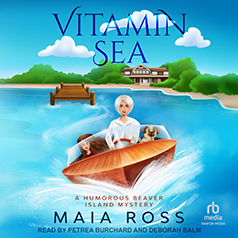
Audiobook cover for Beaver Island Mystery 1 - Vitamin Sea by Maia Ross. Read by Petrea Burchard and Deborah Balm

I was delighted to receive an audiobook copy of Vitamin Sea by Maia Ross, the first cosy mystery in her Beaver Island Mysteries series. I originally read the ebook before publication as Maia’s beta reader, so I already knew the story well — but that actually made listening to the audiobook even more intriguing.

What I really wanted to know was this: would the narrators do justice to the two main characters I’d already fallen in love with, Irma Abercrombie and Violet Blackheart?

I’m happy to say that they absolutely did.

The audiobook is narrated by Petrea Burchard and Deborah Balm, both new-to-me voice actors, and I thoroughly enjoyed their performances. Petrea and Deborah brought each of their chapters to life, clearly distinguishing the two protagonists while maintaining a cohesive overall feel to the story. The pace of the narration suited me perfectly — unhurried and comfortable, yet never dragging.

Why Vitamin Sea Works So Well as an Audiobook

I particularly appreciated the variety of voices they used for the wider cast of characters. Group conversations were easy to follow, which isn’t always the case in audiobooks, and the characterisation felt consistent and natural throughout. Irma’s warmth, wit, and grounded wisdom came through beautifully, while Violet’s sharper edges, vulnerability, and personal growth were handled with sensitivity and nuance. The contrast between them — one of the great pleasures of the book — translated wonderfully into audio.

Listening to Vitamin Sea felt like returning to Beaver Island in a different way — familiar and comforting, but with added depth brought by the narration. The island setting really shines in audio form; you can almost feel the lake air and small-town atmosphere wrapping around you.

Even knowing the plot already, I stayed fully engaged, which says a lot. In fact, listening deepened my appreciation of certain scenes and character interactions in ways I hadn’t noticed when reading.

If you enjoy cosy mysteries with strong female characters, a vivid sense of place, and a story that feels like a warm escape without losing its bite, Vitamin Sea works wonderfully as an audiobook. Whether you’re new to the series or revisiting it in a new format, this is a very satisfying listen — and a great start to the Beaver Island Mysteries.

See VITAMIN SEA on Goodreads.com

Visit Maia Ross‘s own little corner of the web. Support her by buying a copy of this (or any of her books) directly from her website!

Check out my profile on Goodreads to see the other books I’ve read, or read more reviews here on The BG Blog.

Success and Dyslexia: 10 Influential People who forged the way.

Here at Brockway Gatehouse and Bookworm Writing Academy, we know everyone has strengths.

People with learning difficulties such as Dyslexia or who are neurodivergent often feel reluctant to chase careers in the publishing industry.  

But I’m here to say don’t let your differences hold you back; instead, see them as unique keys that unlock your creativity.

Don’t believe me?

There are many aspects of life where Dyslexia is recognised to be an advantage; I have compiled a list of 10 Great Dyslexics.

Photo Collage of 10 influential people with dyslexia

1.   Agatha Christie

black and white photograph of Agatha Christie. The quoted text reads, "I. myself, was always recognized...as the "slow one" in the family. It was quite true and I knew it and accepted it. Writing and spelling were always terribly difficult for me. My letters were without originality. I was...and extraordinary bad speller and have remained so until this day."

Of course, I had o start my list with one of the most successful writers EVER!

It is remarkable to learn that such a famous writer had Dyslexia and continues to be the world’s best-selling author. Born in the South West of England, Agatha wrote over 60 detective novels and The Mousetrap, the longest-running play in the world.

Even 30 years after her death, her books are still being reprinted and adapted into films and TV series.

2.   Albert Einstein

This is not a joke.

The most famous scientist to ever walk this planet used to get bad grades at school. He won numerous prestigious prizes, including the Nobel Prize for Physics. You’ve probably heard of the equation E=mc squared, even if you don’t know what it means.

Black and white photograph of Albert Einstein. The quoted text reads, "Everybody is a genius. But if you judge a fish by its ability to climb a tree, it will live its whole life believing that it is stupid."

3.   Cher

Photo of Cher. The quoted text reads, "I never read in school. I got really bad grades-Ds and Fs and Cs in some classes, and As and Bs in other classes. In the second week of the 11th Grade, I just quit. When I was in school it was really difficult. Almost everything I learned, I had to learn by listening. My report cards always said that I was not living up to my potential."

The Grammy-winning singer and Academy Award-winning actress struggled at school with her then-unknown learning difficulties. She couldn’t finish her homework quickly, and maths became a foreign language! So, she started to learn by listening. Subsequently, her weakness became a strength, and she used sound to become a superstar.
4.   Jamie Oliver M.B.E.

World-famous chef Jamie Oliver has built a food empire selling books and TV shows together with opening successful restaurants. He has Dyslexia, and despite writing his own books, he apparently never finished reading an entire book until he was 38.

Often, it’s been found that people with Dyslexia find learning by listening more accessible like Cher has. Maybe Jamie learns through his sense of taste and smell.

Photo of Jamie Oliver. The quoted text reads, "School was a struggle for me, people thought I was thick, I really needed someone to help understand my strengths."

5.   Keira Knightley O.B.E.

Photo of Keira Knightley. The quoted text reads, "My spelling makes people laugh but I was lucky to have a teacher who focused on what I was writing, not how I was spelling it. That let me explore my creativity."

Keira was diagnosed with Dyslexia when she was 6 years old. She is still a slow reader and can’t read out loud, but she is an award-winning actress who has made Dyslexia her own. The English starlet has held some of the most recognisable roles in 21st-century cinema, starring alongside Jonny Depp and fellow dyslexic Orlando Bloom in Pirates of the Caribbean. She has appeared in many films, including Star Wars, Bend It Like Beckham, and Pride and Prejudice. In October 2020, she backed Made By Dyslexia, a global campaign to help teachers address “dyslexic strengths”.

6.   Maggie Aderin-Pocock M.B.E.

Margaret Ebunoluwa Aderin-Pocock is a British space scientist, science communicator and educator. She believes having a dream is essential for focusing the mind and encouraging hard work. Maggie still dreams of travelling to space and hopes that this may become a reality in the future. She was also determined to break down the stereotypes surrounding science and make children see that anyone could be a scientist. In 2009, she was honoured by the Queen as a Member of the Most Excellent Order of the British Empire, making her Dr Maggie Aderin-Pocock MBE.

Photo of Maggie Aderin-Pocock. The quoted text reads, "My dyslexic thinking means "I don't just think outside the box...I think outside the planet!"

7.   Richard Branson

Photo of Richard Branson. The quoted text reads, "Being Dyslexic can actually help in the outside world. I see some things clearer than other people do because I have to simplify things to hep me and that has helped others."

The entrepreneur and businessman have metaphorically and literally had a meteoric rise through his life, establishing the world-famous Virgin brand. You have probably used his companies somewhere, travelling trains, planes or automobiles. Richard Branson has grabbed hold of his ability to see the bigger picture; sometime soon, we will all see it in space travel.

8.   Steven Spielberg

The director and producer have sculpted modern cinema. It was not always easy for him as learning to read took him two years longer than his classmates. In recent years he has spoken about his Dyslexia and returned to college in his fifties to complete a degree.

Photo of Steven Spielberg. The quoted text reads, "Being diagnosed with Dyslexia at age 60 was "like the last puzzle part in a tremendous mystery that I've kept to myself all these years."

9.   Whoopi Goldberg

Photo of Whoopi Goldberg. The quoted text reads, "The advantage is that my brain sees and puts information in my head differently, more interestingly than if I saw like everyone else." Whoopi Goldberg on her Dyslexia

Her real name is Caryn Elaine Johnson. The dyslexic actress has won virtually every award going. Despite the difficulty of learning her lines, she became the second African American woman to win an Oscar. She was made famous for her performance in ‘The Colour Purple’, which hit the screens in 1985. Since then, she has flourished, even attaining an Open University degree, which she often studied between takes on film sets.

10.  Winston Churchill

When we talk about ‘inspirational,’ there are few better than the former two-time Prime Minister, Winston Churchill. He famously led the country through The Second World War and was a historian and writer. If becoming Prime Minister wasn’t enough, he also wrote many books, eventually winning a Nobel Prize in Literature for his life’s work.

I’ll finish with film director, Steven Spielberg’s words of advice and a quote from actor, Orlando Bloom:

“You are not alone, and while you will have Dyslexia for the rest of your life, you can dart between the raindrops to get where you want to go.

It will not hold you back.”

Steven Spielberg
Photo of Orlando Bloom. The quoted text reads, "The challenge of dyslexia--the challenge of climbing that mountain--is something that you can make your own and make it a reason to be a winner in life."

Don’t forget to wave your dyslexia flag especially throughout Dyslexia Awareness Week organised by the British Dyslexia Association.

If you have been diagnosed with dyslexia or any other neurodivergence that makes writing a challenge and want to publish a book. Get in touch.

10 Podcasts Every Indie Author Needs to Listen To

If you’re anything like me, if you’re awake, you’re probably doing 101 jobs. Reading, writing, marketing, or listening to audiobooks or podcasts to help you do one or a combination of those things better.

Or maybe that’s just me …

There are many podcasts out there about the business and craft of writing. You probably can’t get to all of them, but don’t worry—I’ve got you covered.

The podcasts on this list will teach you everything you need to know about writing, publishing, and marketing your work.

It’s like taking a Masterclass from some of the best in the industry, completely free.

These are my top 10 favourite podcasts for indie authors.

#1: The Creative Penn

Joanna Penn’s podcast, The Creative Penn, has been around since before podcasting was cool. She’s been an author, marketer, and entrepreneur in the indie author world for many years. She is eerily prescient when it comes to anticipating changes in the industry.

If you’re looking for a one-stop source of interviews, industry info, and updates from an indie author who practices what she preaches in real-time, check out The Creative Penn. Recent episodes tackle AI, world-building, and researching your book as thoroughly as a librarian.

Great for: Weekly real-time updates from a working author, author interviews, and industry insight

#2: Grammar Girl Quick and Dirty Tips for Better Writing

Even grammar know-it-alls will find much to love in the Grammar Girl podcast. Whether you’re looking for a chance to geek out on em-dashes or debate the merits of the Oxford comma, Mignon Fogarty’s got you covered.

Episodes are quick and to the point—usually 15 minutes or less—and cover a lot of ground. Recent episodes include tips on using present tense in stories about the past and the top 10 grammatical errors writers make. Mignon covers the nuts and bolts of good grammar, of course, but also the basics of good storytelling.

Great for: Getting a grasp on English grammar for both native and non-native speakers

#3: The Red Hot Chilli Writers

British Asian authors Vaseem Khan and Abir Mukherjee should be writing. But instead, they’re creating a funny, self-deprecating podcast and sharing valuable writing and publishing tips. 

Joined each episode by special guests, Vaseem and Abir take a wry look at the world of books, writing, and the creative arts. Tackling everything from bestsellers to pop culture and Big Fat Asian Weddings.

Listen to some stellar interviews, such as with Dean Koontz, Val McDermid, Ann Cleeves, and Mike Gayle, to name a few. With the odd dose of cross-cultural confusion, they dare to explore the parts other podcasts cannot reach.

Great for: Authors who want down-to-earth advice with a spark of humour.

#4: In Writing with Hattie Crisell

Each episode sees British journalist Hattie Crisell go deep with a writer over 60 minutes.

She’s an excellent interviewer who does her research, so she asks great questions and builds rapport with each guest. There are gems and new ways of thinking about writing in every episode.

I loved novelist Maggie O’Farrell talking about why she has two desks—each for a different project. Lucy Prebble on how the Succession writing room works. Charlie Booker and James Acaster are just being their brilliant comedic selves.

Great for: Writers who want a peek into the lives of fellow wordsmiths and bestselling authors.

#5: The Editing Podcast

Hosts Louise Harnby and Denise Cowle discuss all things editing.

Episodes cover editing software, grammar, short-form edits, long-form edits, punctuation, and cost. The podcast is geared toward both writers and editors.

Each host contributes a different scope of expertise, including business/technical editing and fiction editing. The Editing Podcast also hosts guest authors and editors. Episodes range from 10 minutes to an hour; listeners will find tips and tricks to tighten their work.

Great for: Writers looking to polish their self-editing skills.

#6: Write Now with Sarah Werner

If you’re feeling lonely on your writing journey, this is the place to go.

Most of these short (around 15-minute) podcasts are monologues about the writing life, filled with wisdom and vulnerability and discussing the kind of blocks and insecurities that will be familiar to most writers.

There are occasional guest interviews, and these are wonderful too. But mainly, it’s Sarah Werner, talking with warmth, humour and searing honesty about her struggles and those of the writers she knows and works with. 

Whatever your challenge, she’ll have an episode that can help.

Great for: Boosting your mindset and sense of community while on your writing journey.

#7: Self-publishing Podcast with the Spa Girls

The SPA Girls are Trudi Jaye, Cheryl Phipps, Wendy Vella and Shar Barratt: four New Zealand authors with over 100 books published.

They’ve been self-publishing since 2013, and Wendy Vella alone has sold over 2 million copies of her historical and contemporary romances.

The SPA Girls Podcast (SPA = Self Publishing Authors) is one of the industry’s leading global publishing podcasts, with over five years of weekly top-rating episodes.

Each week the SPA Girls bring listeners a new episode covering self-publishing, writing craft, marketing advice, advertising strategies and expert guest interviews.

Great for: Writers who are beginning their author journey and want to learn about the writing business directly from those doing it.

#8: Pen to Published Podcast

A podcast for authors and self-publishers hosted by the two Alexas. Alexa Whitten is an author, typesetter and independent book publisher. Alexa Tewkesbury is also an author, editor and proofreader. They talk you through self-publishing, from the initial book idea to the ultimate published product.

Every episode is informative, covering fiction, children’s, and business books. Each series (five available to date) includes an author interview and special guests.

Great for: Anyone looking to self-publish a book.

#9: The Honest Authors’ Podcast

Bestselling authors Gillian McAllister and Holly Seddon discuss the truth about being an author, plus expert insider interviews.

Every episode has incredible insights, gems of wisdom and new ways of thinking about writing while being easy to listen to with honest confessions.

Great for: Aspiring authors who want to know what it is to be a writer without rose-tinted glasses.

#10: Writer Dojo

The WriterDojo is different from most other writing advice podcasts out there. Steve Diamond is a Horror, Fantasy, and Science Fiction author, and Larry Correia is the New York Times bestselling author of twenty-five novels.

Steve and Larry cut through all the awful advice and help writers tell stories people want to read with humour and a wealth of experience. However, readers will find plenty of fascinating titbits as well. They may come away with new insights into what goes into creating the stories they love and a new appreciation for writing of all sorts.

Great for: Advice on how (and how not) to earn money from writing a book. 

Of course, when you begin listening to podcasts on writing, publishing, and running your own business,  you’ll discover many more.

Do you already listen to podcasts? Did I miss your favourite podcast? Tell me by replying to this email.

4 Grammar Myths Busted!

In the world of proofreading, grammar myths abound. These are typically presented as ‘rules’.

Overzealous pedants may therefore try to correct things that are not actually mistakes. But skilled editors and proofreaders will only make changes when they are necessary.

To help you avoid falling into these grammatical traps, I’ll dispel some of the most pervasive myths in this post.

1.  Never Split Infinitives

Telling people not to split infinitives is almost a cliché of pedantry.

But the rule against splitting infinitives is an invention of nineteenth-century grammarians based upon attempts to apply the rules of Latin to English. Modern grammarians do not stick by this rule at all.

In fact, sometimes, splitting an infinitive can boost clarity. For example, to stupidly go swimming clearly implies the decision is stupid since stupidly is right next to go.

In to go swimming stupidly, on the other hand, stupidly is closer to swimming than go, which might suggest that one is swimming in a stupid manner. So, even though this version avoids splitting the infinitive, it is less clear.

I’ll leave it up to you to picture what stupid swimming would involve.

2.  Never Start A Sentence With A Conjunction

You should not start a sentence with a coordinating conjunction (i.e. for, and, nor, but, or, yet, or so). But this is not held to be confirmed by any authoritative sources.

In practice, starting a sentence with a conjunction is common. It can even help emphasise the connection between two statements or enhance the flow of prose. For example:

You have a lot of potential as a proofreader. But everyone needs to practise!

So, while starting every sentence with a conjunction would be stylistically poor, never using a coordinating conjunction at the start of a sentence could detract from the flow and clarity of writing.

3.  Never End Sentences With A Preposition

 This is another case of mistakenly basing English usage on Latin. And while ending a sentence with a preposition can sound awkward, it is usually fine.

There is only one thing in the world worse than being talked about: not being talked about.

(Oscar Wilde, The Picture of Dorian Gray)

Both clauses here end with the preposition about. To avoid this, we would need to rephrase to something like this:

There is only one thing in the world worse than being the subject of conversation, and that is not being the subject of conversation.

This is almost certainly a less memorable aphorism! And since the original makes perfect sense, changing the sentence to avoid ending on a preposition would be unhelpful.

4. Double Negatives Are Always Incorrect

The prohibition against double negatives is often overstated. You should correct non-standard double negatives (e.g. I saw nothing) if they are used in formal writing.

But these might be acceptable in less formal or literary contexts. And many double negatives are standard in most forms of writing, such as saying something is not uncommon to mean it is pretty typical:

It is not uncommon to find double negatives in a well-written document.

This usually depends on the document’s tone, so take care when correcting double negatives.


I hope you found this post about grammar myths useful and will no longer fear these all-too-often touted “rules”. The English language is a living, evolving thing that changes and develops as society changes.

If you have any writing dilemmas, I’m here to help. Get in touch.

6 Familiar Creative Struggles and how to conquer them!

Beginning your journey as a writer is new and exciting but it has it’s challenges too and learning how to conquer any creative struggles that will pop up is essential to a long author career.

Every author has faced obstacles in their writing lives—rejection, self-doubt, criticism, or something else. Doubts and imposter syndrome: “What if my novel isn’t good enough?” have plagued the best of them. When good writers read great books with complex characters and fantastic plot arcs—books so engrossing they can’t put them down—they compare their our novels to those bestselling books. “Why would someone read my story when that author’s book is much better?

But that’s the thing. If you look at those authors, they’ve been writing for what—ten years? Now they have a publishing contract, an editor, beta readers, and others to support them in their work. But they had the same doubts and fears when they first started writing. They all faced struggles.

Today, let’s tackle those doubts, fears and struggles head-on.

STRUGGLE #1: YOU FEAR YOUR WORK ISN’T GOOD ENOUGH

You re-read your manuscript, and you think it’s lacking in everything. In fact, you think it’s just plain terrible. You’re about to throw it in the bin when…

Stop! Don’t throw it in the bin. Not yet. Let me tell you something. Is this your first novel? Okay, here’s the thing: Nearly every author’s first novel is terrible. You just started. I hate to break it to you, but your book will not be perfect on the first try. You have to revise.

Maybe it’s so bad you think it can’t be revised. That’s perfectly okay. Just sit down and work out what’s wrong with your novel.

  • Are your characters too clichéd?
  • Is your plot gripping?
  • Does the story hold the reader’s interest?

Target what’s wrong with your work, and make a plan to fix it.

Turn doubt into action.

STRUGGLE #2: YOU RUN INTO WRITER’S BLOCK

You’re stuck. You bang your head against the table, but no ideas come. Hey! Stop banging your head against the table, please. You’re going to give yourself a headache.

Okay, so you’ve run out of ideas.

What is your plot? Do you even have a plot? Think about what you’re writing. Are you writing a horror story? Fantasy? Romance? Sci-fi?

Do something that inspires you:

  • If you write horror, walk at night when it’s windy, and no stars shine through the clouds.
  • If you write fantasy, think about your hero. What is their goal? What keeps them from reaching that goal?
  • If you write romance, go to the park and people-watch. Observe a couple’s argument. What are they arguing about? Why are they arguing? Is it about something silly, like why all the pigeons are gathered around them, or something serious, like relationship issues?
  • If you write science fiction, consider science. You’re writing a book about clones taking over the world. Research cloning. How would it really work? What if there was some sort of mutation?

For all of the above, go somewhere that helps you get new ideas. Take a break from the computer (or notebook, if you write the old-fashioned way) and go on a walk or a drive. Go somewhere that makes you happy or sad or inspired. Go to a place that stirs strong emotions in you.

STRUGGLE #3: YOU DON’T KNOW HOW TO HANDLE INSPIRATION

You have a flash of inspiration. An image of a person, maybe, or an emotion you need to write about.

Figure out how you can work this into your story.

What was this person like? A long scar down her cheek? What was her personality like? Secretive, cold, standoffish? Would this be one of your secondary characters or a main character? When, where, and how can you put this in your story?

Write it down and determine where to use it in your novel.

STRUGGLE #4: YOU’RE NO LONGER FEELING INSPIRED

Your bolt of inspiration has fizzled out. Now you’re left with 30 pages of work that you don’t know what to do with. It’s okay. Don’t panic.

Try to work on your plot.

Figure out what’s going to happen next. Are your characters kidnapped? Do they have to figure out a puzzle?

It may help to consider how you’ll develop your characters instead.

What kind of journey does your character go on? How do they change throughout the story? What struggles do they have to overcome?

STRUGGLE #5: YOU DON’T KNOW HOW TO GET STARTED

You have great ideas and are ready to start writing — but you have no idea how to draft your book’s beginning. This is something I can relate to. Let me give you some advice: You don’t need to start at the beginning. Wait, what? But when I read a book, the beginning comes first…

Well, duh. But you don’t need to start writing there. You can even write from end to beginning if that’s your preference.

My advice?

Start with the scene that energizes you the most. Excited about your story’s climax? Write that first. Don’t worry about the beginning. Start writing at the place or scene that calls to you.

Alternatively, take my free course: First Thing’s First. Let me help you get started.

STRUGGLE #6: YOU DON’T KNOW HOW TO HANDLE REJECTION

This is one of the biggest struggles!

Your novel is finished. You worked hard, poured your heart and soul into it, cried many tears, and were almost bald from pulling so much hair out from the stress. You send it to an agent. A month later, you get a form letter addressed to “dear writer.”

Take a deep breath.

I know you probably cried your eyes out at seeing that letter. I know it hurts. You may want to give up and never send your manuscript to another agent again. You’re hurting, and that’s okay. Go ahead. Cry your eyes out. There’s absolutely no shame in it..

Okay, now listen to me. No author gets it easy. Every author, including JK Rowling and James Patterson, has received rejection letters. I know one author who received 98 rejection letters before he became traditionally published. 98!

You must define where you went wrong if you receive a rejection letter. Was your query not enticing enough? Is your story’s hook lacking? Did the agent no longer want submissions for stories in your genre? If you can take action, do so. Allow rejection to refine your work.

Final word

Writing is hard. I think we’ve all learned this. If it were easy, everyone would do it. You’re different from other people, though. You may write to entertain people. That may be one of your reasons, but you write because you have a voice that others don’t. You can speak for those who can’t.

Every word you write, sentence, and paragraph can change people with what you write. You don’t have to write non-fiction to do that. You can inspire people. Your characters can be the ones readers turn to in times of struggle. And that, is what every writer strives to achieve. You’ll get there. You can get published. You just need to believe in yourself.

I’m here to help with any of your struggles, contact me.

What’s the difference between a writing coach and a mentor?

The difference between a writing coach and a mentor is a coach works with you for a particular purpose or goal. A mentor is a guru who is with you over an extended period in an advisory role. The relationship between coach and client is shorter-term versus longer-term mentoring relationships.

The confusion between coaching and mentoring

young annoyed female freelancer using laptop at home
Photo by Andrea Piacquadio on Pexels.com

It’s all too easy to confuse coaching and mentoring. Both aim to help clients learn from their experiences to overcome difficulties or succeed in various areas of their lives. Those in the process want to improve, usually through setting goals or working towards new skills.

Both approaches also rely on regular interactions to make a change. Coaching/mentoring sessions are used to review progress, decide on the next steps and gain more insight into what else they could do and how. Without these regular meetings, it is unlikely that any progress would be made.

The exchange of knowledge is a fundamental feature of coaching and mentoring, with each situation having a “teacher” and “student” in some capacity. In mentoring, this knowledge transfer is more direct and may be directly related to the individual’s role. In coaching, the information and guidance focus on how to unlock potential, what processes can be used to achieve success, and how to understand your own strengths and weaknesses.

Finally, mentoring can often involve aspects of coaching and vice versa. A mentor may coach their “student” by making a suggestion that helps them improve their self-awareness and trigger personal development.

However, there are essential differences between coaching and mentoring.

pink jigsaw puzzle piece
Photo by Ann H on Pexels.com

The differences between mentoring and coaching make each more suitable for different situations.

Firstly, a writing coach provides guidance and an actionable framework for growth and development. A mentor, on the other hand, centres around building a relationship between two people. While individuals may have a good relationship with their coach, trust and understanding are at the core of a successful mentoring relationship. More time is often invested in ensuring that the mentor and mentee are happy to work together.

The mentor and mentee relationship may see the mentor’s connections being utilised. For example, to open more doors and provide opportunities for experience and networking, which tends not to be offered in a coaching relationship.

Often, coaching focuses on what can be done in the present, which is another significant difference. In contrast, mentoring looks to the future and decides what needs to be done later to achieve the mentee’s goals. Having said that, goal setting and overall aspirations are aspects of coaching. However, coaching focuses on improving your performance now to uncover potential while putting systems in place to allow you to be more successful in the future.

While every scenario varies, coaching tends to be a shorter process. It may only last until a coachee is thought to have improved and feels more prepared to carry on without additional support. On the other hand, a mentorship relationship is often a long-term arrangement. The mentor and mentee will keep in touch for check-ins and reviews, and the mentor may support their mentee’s entire journey.

Finally, a coach will often have more training and qualifications in techniques and approaches to coaching development under their belts than a mentor. They may even be expressly certified as a business or development coach. Mentors usually have more experience and knowledge of the industry they work in. However, they’re less likely to be certified to coach.

What is coaching?

two women sitting in front of computer monitor
Photo by Startup Stock Photos on Pexels.com

Coaching is a developmental process focusing on improving performance and achieving goals. It measures what skills, tools, and resources are available and builds on these to enable progress and achievement.

At its core, coaching believes that individuals already have everything they need to achieve what they want. Coaching aims to reveal this potential and help the individual realise how to succeed. A coach highlights the existing tools instead of teaching them something new.

Coaching is also about helping an individual develop self-awareness. This is so that the coachee can realise their skills, work out what they want to achieve, and create realistic strategies for getting there. By the end of a coaching period, an individual will have a workable framework. They should also feel empowered and fully equipped to set and achieve goals without relying on someone else for support and guidance.

What is a writing coach?

A coach enables development by working with individuals to help them realise their potential and plan to achieve their goals. It is not a coach’s job to teach anything new or set out instructions about what needs to be done. Instead, a writing coach asks questions and provides a framework for individuals to find solutions to their challenges.

A coach is usually a trained professional who has studied and developed coaching practices and models. They are hired by individuals (or companies) to guide and reveal hidden abilities and aspirations, enabling reflection without offering direct instructions.

What can you expect in a coaching session?

A coaching session is a meeting between a client and a coach, where personal development is the main focus. The coach assesses the client’s current situation and suggests what needs to be revised to accomplish specific objectives. Coaches can’t tell you precisely what to do but may offer strategies to point you in the right direction. They will utilise coaching techniques in the tasks they set you.

A coaching session consists of objectives and activities the coach instructs the coachee to complete to achieve those specific goals. It’s not about sitting down and asking for someone else’s advice. It is about following through on those instructions so that you begin to see improvement in your personal and professional performance.

What is the difference between coaching and training?

I thought I’d deviate a moment to highlight the confusion between coaching and training.

Training is another method of learning that can easily be confused with coaching. However, an easy way to remember is that training involves acquiring new skills through transferring knowledge. In contrast, coaching builds on your skills and enhances your existing talents.

What is mentoring?

people sitting on the couch
Photo by RODNAE Productions on Pexels.com

Mentoring is another developmental process that relies more on the relationship between two people and the transfer of knowledge that comes from this. By pairing an individual with a more experienced peer, learning and development can occur more equally. A relationship of support and trust can be developed, leading to more meaningful progress.

Mentoring comes in many forms. Utilising the mentor’s experience and ability to pass on knowledge or starting from what the mentee can get from the relationship and what they hope to achieve. There doesn’t have to be a hierarchical difference in skill or experience in mentoring; sometimes, the mentor may be less qualified but possess skills that another may benefit from. The outcome of mentoring is to drive long-term growth and career development.

What is a mentor?

A mentor is a guide or supporter. They have extensive skills and experience and offer training and insight to someone at an earlier stage of their journey or right at the beginning.

The formality of a mentor’s role can vary based on what is appropriate for the situation. For example, companies create mentoring programmes between senior and junior employees. These programmes may have regularly organised meetings, structured systems of measuring improvement and a set timeframe. In contrast, other mentorship schemes may be more informal and about building supportive relationships.

What can you expect in a mentoring session?

Mentoring meetings are guiding conversations where your mentor will advise you rather than give hands-on instruction for you to follow. Mentors generally have already succeeded in the aspect of life you want guidance in. They’ll have more expertise and knowledge than you and share it during your sessions.

A mentoring session may focus on helping you improve your goal-setting skills. You can use the time to ask specific questions or for general advice. During a mentoring session, you’ll gain insights into life’s challenges and possibilities, such as career development, specific skill requirements, and business collaboration.

Writing coach or mentor, which is right for me?

photo of pathway surrounded by fir trees
Photo by James Wheeler on Pexels.com

Coaching and mentoring are instrumental ways to develop and learn. Many authors and business owners use both to support and enhance their growth.

A mentor gives advice and act like a role model by sharing helpful information over an extended period, while a business or writing coach enable you to take action with a framework. When seeking these services, look for information on their processes to make an educated decision about the support you require and what they give while working with them.

If you’re wondering if you’d benefit from utilising a coach or mentor, I can confirm that they’re incredibly beneficial strategies for everyone involved. Mentors and coaches can assist you in achieving your objectives.

Want a writing coach? Check out my coaching services.

The Artificial Intelligence (AI) Debate

AI is the biggest news story of 2023, causing impassioned debate in the creative community. (Listen to The Creative Penn podcast by author Joanna Penn or read her blog.)

Opinions can be polarised: on one side, you have a kind of utopian optimism (I, for one, welcome our robot overloads). And on the other extreme, apocalyptic doom-mongering.

I want to create a middle ground. I’m aware of the dangers and respect potential rights issues while accepting that AI is already here, whether we like it or not. I have to ask myself whether there is a safe and ethical way to use AI tools.

OpenAI‘s creation is Chat Generative Pre-trained Transformer (ChatGPT). And it’s the tool I’ve been playing with since hearing about it on Joanna’s podcast, hoping to make some marketing tasks more efficient rather than something more creative.

The explosion in popularity of ChatGPT has caught everyone by surprise. A few days ago, it passed 100m users—the fastest-growing consumer application in history.

For context: it took Instagram two years to reach 100m users. TikTok did it in 9 months, the pace of its growth throwing all the other social networks into a panicked redesign.

ChatGPT hit that milestone in 2 months!

man in black crew neck t shirt sitting beside woman in gray crew neck t shirt
Photo by Canva Studio on Pexels.com

Why is AI so controversial?

The depth of feeling on this issue is substantial. This is to be expected with any technological advancement which has the potential to be hugely disruptive. But it’s not just disruption which is causing concern.

As an editor and writing coach, I will not enter into the sea of societal and political concerns around AI. However, there are pressing issues specific to authors, artists, voice actors, etc., which I want to talk about.

Although I see the positive potential of AI, significant questions remain about how those Al models were trained:

  • Were creators’ work used without permission?
  • Were any rights infringed?
  • Plus, what is the legal status of work created with AI-powered tools?

Those questions have not been addressed adequately. Legal action has already been filed against Midjourney and Stable Diffusion, claiming that billions of images were scraped from the web without authorisation. (The first of many such steps, one would imagine.)

However, whether we like it or not—whether we’re ready or not—AI is already here.

They’re here.

AI is now being incorporated into Bing, and Google will follow shortly with its own version of AI-augmented search.

AI tools are now being incorporated in all sorts of other places, which will increase their usage exponentially. For example, WordPress announced that it is testing generative AI art blocks. This means that I’ll be able to effortlessly generate AI art by typing a description of the image I’m looking for right there in the back end of my WordPress site.

Change doesn’t wait for you to be ready. AI isn’t going to pause while everyone explores all the issues. The moral and legal issues around creators, rights, infringement, and the copyright status of anything made with these tools or the ramifications for society at large.

AI isn’t just here already—it’s about to go mainstream. And that’s going to make it impossible to ignore.

apple laptop notebook office
Photo by Pixabay on Pexels.com

Apple and AI Audiobooks

Tech giant, Apple announced last month that it would accept AI-generated audiobooks for the first time, something that most retailers like Audible don’t permit yet as I write this. Not only that, but Apple would provide AI narration tools to authors and publishers.

You can see why the idea is attractive to some: audiobooks can be expensive to produce (or require an incredible time investment if you make them yourself). Having AI narrate an audiobook would solve that problem neatly, significantly reducing the time and money needed to produce audio editions.

What worries me is the fate of some narrators. Voice actors are suddenly facing an existential threat of their own after finally seeing a viable and healthy audiobook market come into being. I’d be surprised if any real audiobook lovers welcome this development.

I’ve been told that some YouTube videos now seem to have AI narration. The quality is generally awful. Although it’s claimed that AI narration will soon be almost indistinguishable from human narration.

However, even if AI narration improves considerably, I doubt the quality could be as good as a human narrator. There’s more to narration than simply reading the text.

The worry is that once Apple has cut the narrators out, they’ll put the squeeze on authors next.

ChatGPT and Authors

What’s of most concern to authors is how AI might affect the future viability of their profession. The disruptive threat facing today’s narrators is just the beginning.

The most obvious concern is that authors could be replaced by a bunch of story bots chained up in the basement of Penguin Random House.

But after playing with Al a little, we’re still quite far away from it producing professional-grade creative work. Of course, given the pace of technological development, we can’t rule out an AI takeover in the future.

high angle photo of robot
Photo by Alex Knight on Pexels.com

My take on ChatGPT

I’m an independent woman, so even though there are genuine controversies around AI tools, I want to know a little more about how they work. This helps me understand the issues better.

I also want to see where all this AI stuff is headed. Work out how it might impact my business.

I’m no expert; if anything, I’m late to the party. But I’ve been playing around with ChatGPT recently and can see some potential in marketing terms. (I’m not using it for creative work at all.)

I heard it suggested that you shouldn’t think of ChatGPT as an expert-on-call, as the media often portrays it. A better approach is considering it a team of interns with boundless energy.

photo of women at the meeting
Photo by RF._.studio on Pexels.com

They often make mistakes, and you definitely have to check their work. Still, they can take much off your plate with clear parameters and constant supervision.

Here are some things I’ve been playing around with using ChatGPT.

•            Taglines, product descriptions, and sales copy

•            Social media text, captions, and headlines

•            Newsletter subject lines

•            Brainstorming/bullet pointing/outlining

Some of the stuff generated was useful, while others were terrible. However, I got better results when crafting more deliberate and detailed prompts. And I got the best results when I forced ChatGPT to refine its responses—one of the most impressive parts of this tech.

ChatGPT can give you an answer to whatever you ask. Still, you can interrogate it and force it to amend its responses based on more specific parameters. This process can lead you to the pot of gold you’re looking for.

person reaching out to a robot
Photo by Tara Winstead on Pexels.com

The AI middle ground.

I hope I have eased some more fanciful concerns about AI replacing humans entirely. Creativity still needs a human mind—at this point, anyway. Al needs humans to input probing questions and analyse, interrogate, and curate the output. Humans will iterate the prompts and know when the true destination has been reached.

And then—most importantly—to execute the information generated.

We’re not obsolete quite yet!

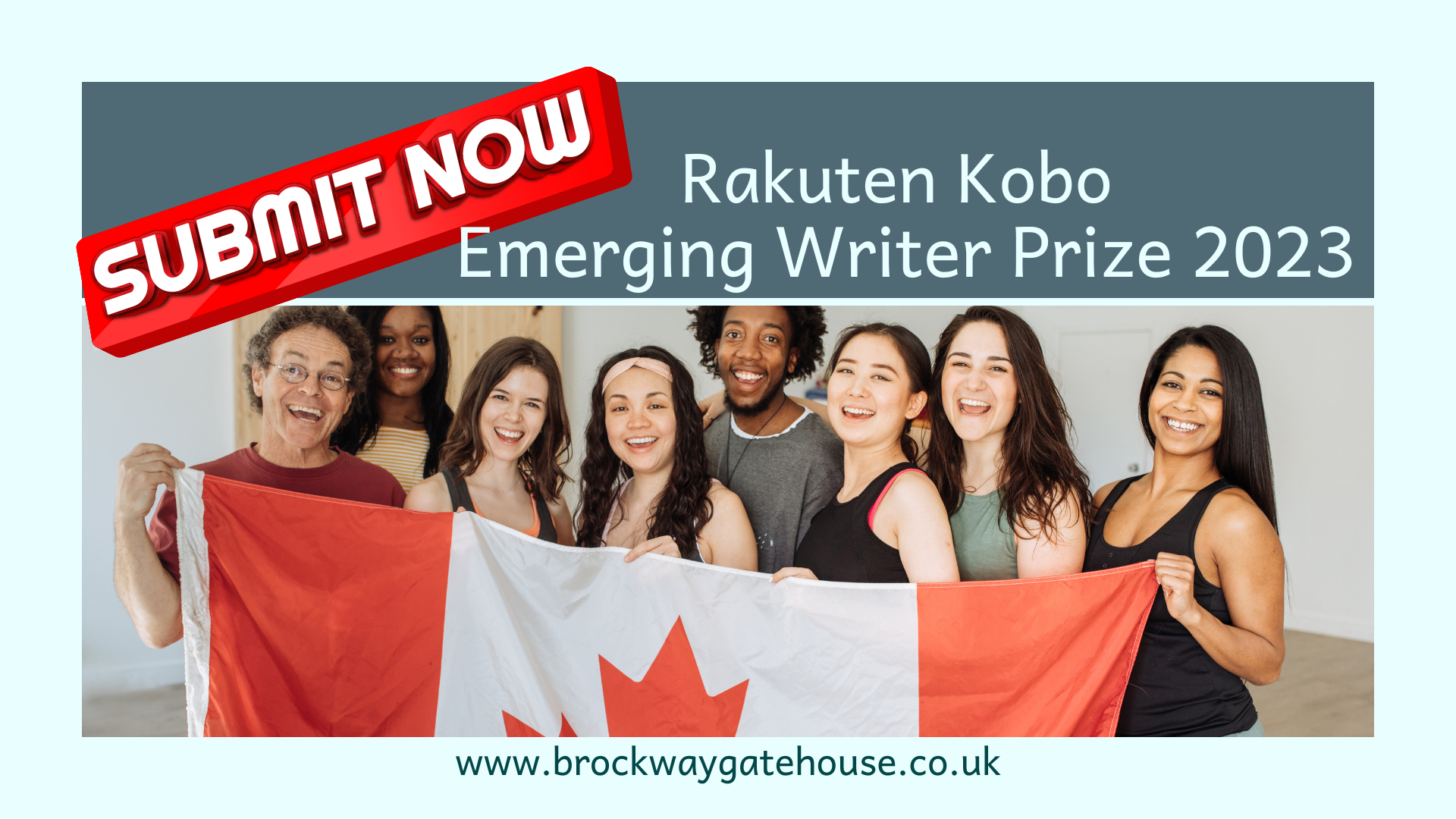
Emerging Writer Prize (2023) Open for Submissions

The Rakuten Kobo Emerging Writer Prize is an annual competition. The award showcases Canadian debut authors with the chance to win CAD 10,000 per category, plus marketing support for the three winning books.

About Rakuten Kobo Inc.

black kobo aura one tablet with box
Photo by Perfecto Capucine on Pexels.com

Rakuten is a Japanese multinational technology company based in Tokyo. Kobo is its digital publisher and bookseller business created by and for book lovers, with its headquarters in Toronto, Canada.

Rakuten Kobo has 38 million users worldwide. Its books can be read anytime, anywhere, and on any device.

Its mission is to improve reading lives by connecting readers to stories using an open platform.

The reason behind the Emerging Writer Prize

Kobo wants to raise the profiles of debut authors. This prize recognises exceptional books written by first-time Canadian authors in three categories:

  • Literary Fiction
  • Non-Fiction
  • Genre Fiction (a different genre is chosen each year, Speculative Fiction is the genre for 2023)

The Emerging Writer Prize is in its ninth year.

Last year’s winners were:

  • Literary Fiction: Ghost Forest by Pik-Shuen Fung. “A graceful and indelible debut about love, grief, and family”.
  • Non-Fiction: Unreconciled by Jesse Wente. A powerful part-memoir, part-manifesto which uncovers the truth of our flawed concept of reconciliation”. 
  • Genre Fiction (Romance): New Girl in Little Cove by Damhnait Monaghan.A delightful small-town, slow-burn romance”.

Three prominent authors are chosen each year to select the winning titles.

The 2023 judges are:

  • Literary Fiction: CS Richardson
  • Non-Fiction: Emily Urquhart
  • Genre Fiction (Speculative): Robert J Wiersema

Submit your book before the deadline: 6th March 2023!

The 3 winning authors will be announced in June 2023. The winners receive a cash prize of 10,000 CAD however, that’s not all. They also receive valuable marketing and communications support for the rest of 2023.

All books submitted must be available at kobo.com.

 Read all the Rules, Regulations, Terms & Conditions before entering.

Spread the word, and good luck!